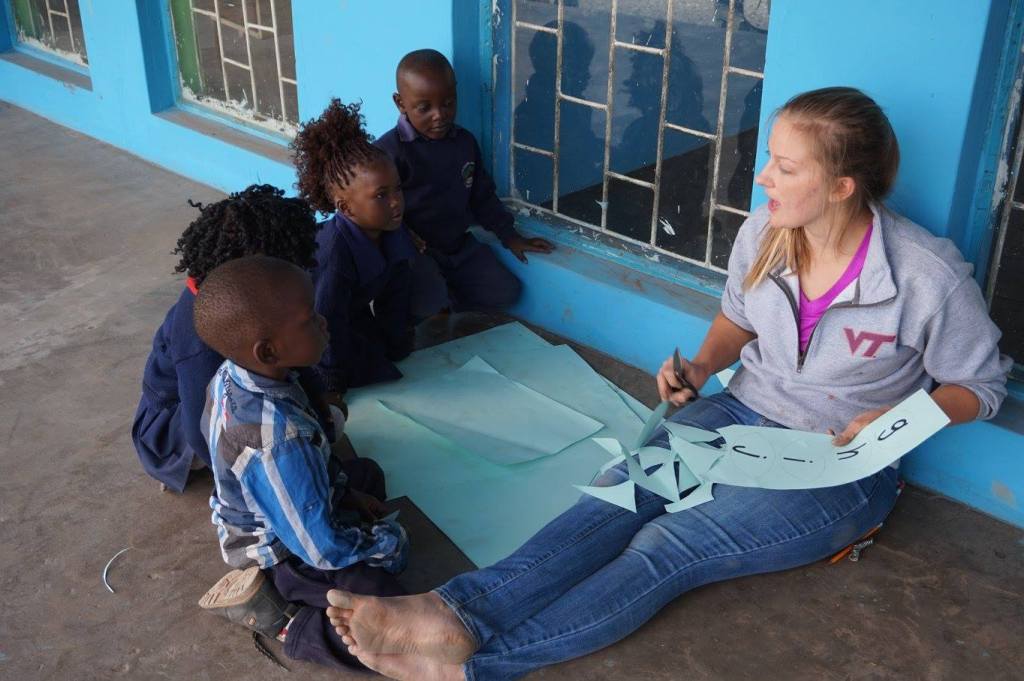
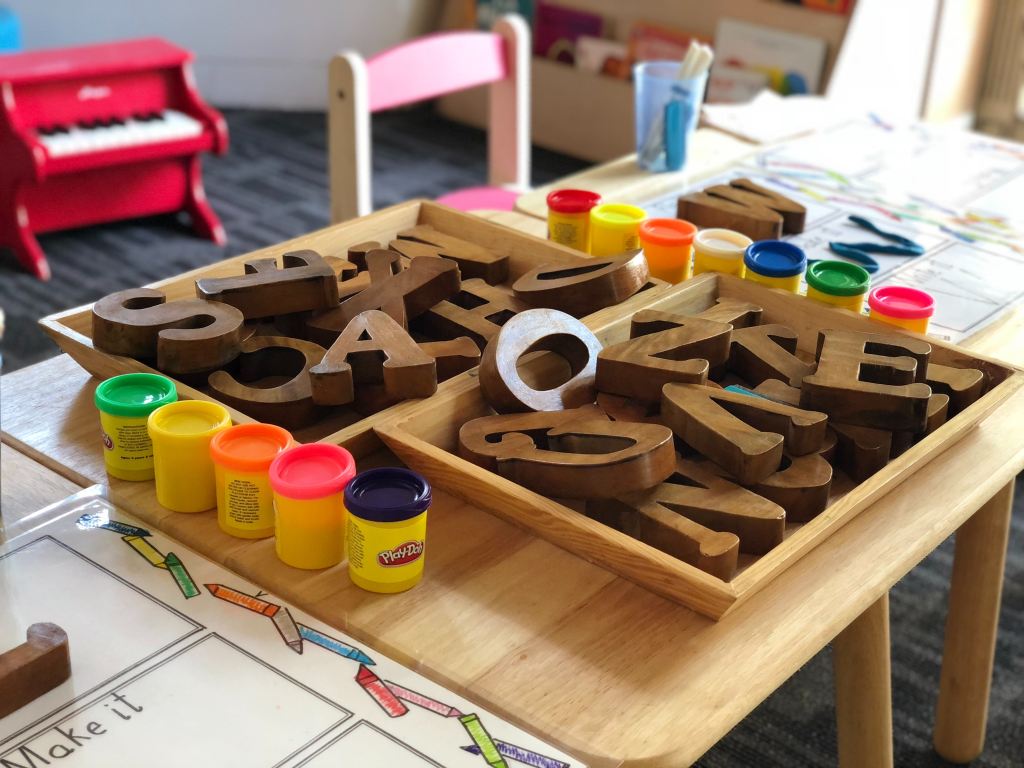
Designing alphabet materials for the “babies'” class at a preschool in Lusaka, Zambia in 2017.
Over the course of my master’s degree program at Vanderbilt, I have had the opportunity to be exposed to a wide array of unique challenges, questions, histories, and contextualized analyses in the arena of international educational theory, research, and practice. I brought into the program a set of experiences in early childhood education, as both a teacher in the United States and volunteer in Zambia, which grounded me with a fundamental interest in early childhood education (ECE) as a pathway to global development. As I kept researching and investigating, I realized that in the field of ECE, so many complex questions about the role of education, the meaning of childhood, and the impacts of policy became central.
What do modern societies believe the role of young children is, and how does childhood take shape globally?
What should education be preparing children for—productivity, future workforce involvement, the unlocking of their freedom of thought and creativity, a social services hub for families and communities?
How do we define what “success” means for students, specifically in the early years, but across the educational trajectory?
What does it mean to build a functional system of education involving diverse perspectives and practices that enables access, quality, and equity for all students?
For me, early childhood education provides a rich environment within which to explore these issues.
This blog is intended to capture many of my interests in this area, and to analyze global approaches, histories, and developments in the field. I intend to keep engaging in these topics, and most importantly, I intend to use the skills and perspectives I have gained in a globally-informed program to make meaningful contributions wherever I am through the ability to ask important questions, evaluate and hold nuanced perspectives, and practically engage in the implementation of critical programs and policies that enable all students—from the early years through adulthood—to access high-quality educational opportunities.
This post is part of a series on contemporary questions in ECE globally. Read about the series as a whole, and find other articles by clicking here.
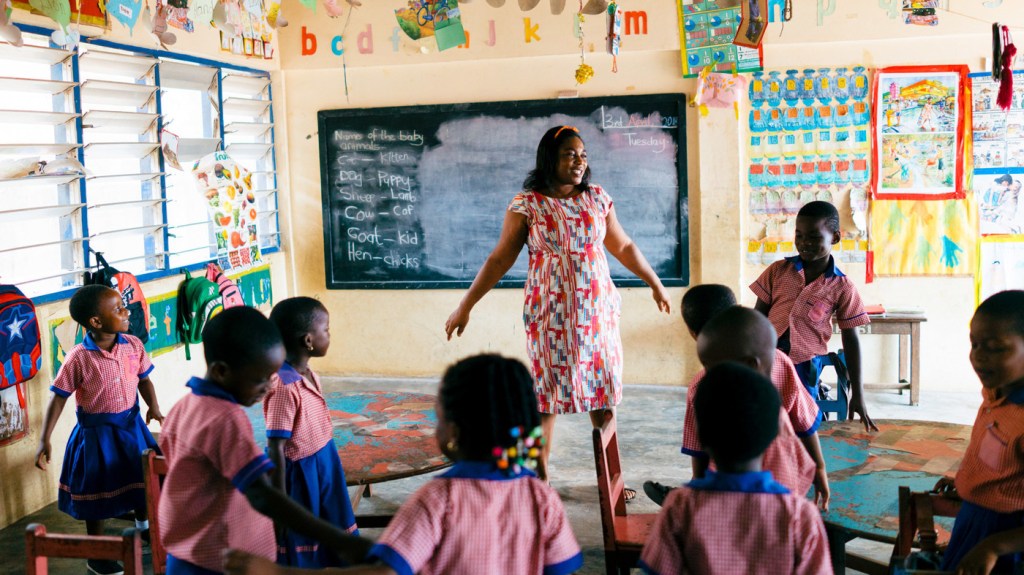
Godaiva Gbetodeme, a Ghanian preschool teacher, highlighted in a recent NPR story exploring the increased preschool enrollments in the country, parental attitudes, and the drive for test performance even for the youngest learners in the country.
In 2018, NPR published a story covering the growing enrollment and shifting teaching practices of early childhood education in Ghana. Within the article, a teacher’s transformation from a highly didactic, repetition-driven approach to a more engaging, play-based approach is profiled, and parental opinions about the new pedagogic approaches are explored. (For more on shifts in pedagogy to child-centered methods, and why this is not inherently for the best, read this post). The author records one interaction with a father, who describes the academic, memorization-driven focus even in the early years of learning.
When we describe the scenes we’ve been seeing in Accra’s preschools to Herman Agbavor — the father who was doing homework with his son — he immediately nods in recognition. “Back in school we used to call it chew and pour,” he says. Meaning, for each possible question, the teacher gives you one correct answer to memorize — or “chew” — so that come test time, you can regurgitate it — “pour it” back to her verbatim.
Aizenman & Warner, 2018, “What We Can Learn From Ghana’s Obsession With Preschool”
This vignette highlights a trend that has trickled down from secondary and primary schools into early childhood settings in recent history, wherein more and more students are facing earlier and earlier timelines for academic learning and preparation. Daphna Bassok and other researchers at the University of Virginia described this “academizationa” phenomenon in an article titled “Is Kindergarten the New First Grade?.” Their research analyzed U.S. teacher attitudes regarding learning standards, and found that in many categories–particularly regarding a belief that children should read by the end of kindergarten–teachers’ beliefs about content and learning benchmarks that used to mark first grade educators have now come to characterize the beliefs of kindergarten teachers. The impacts of such beliefs are troubling: as standards of academic learning are pushed onto younger and younger children, the tests that are intended to indicate progress toward these standards are being emphasized for younger and younger children.
In a recent Brookings article, “A Prescription for Play: A Pediatrician’s Case for Resuscitating Play,” the startling truth about shifting childhood access to unstructured time in the United States was recently highlighted: “excising play through a 30 percent drop in recess coupled with a 29 percent rise in test preparation creates classroom contexts that are driven by narrowly didactic goals with even kindergarten classrooms having little or no time for play or choice time.” The article, written by Kathy Hirsh-Pasek, a leading early childhood researcher, and Michael Yogman, professor of pediatrics at Harvard Medical School, highlights what many early childhood educators know all too well: testing and accountability initiatives are pushing playful learning further and further out of the classroom, to the detriment of child health and wellbeing.
As many have described, educators are living in the “era of accountability” where test results form the basis of evaluation for students and teachers alike, tests are standardized, and largely resemble the “chew and pour” method of memorization and testing regurgitation that Mr. Agbavor described in Ghana. This not only is stressful for students, but minimizes the professional independence and agency of the educators in early childhood classrooms. In a field with low levels of professionalization, this is a critical issue.
Jal Mehta’s analysis of the American educational system’s accountability trends, The Allure of Order, highlights one particular change that could be transformative across educational systems: the professionalization of the teaching workforce. He recommends an approach that “inverts the pyramid” of accountability. At present, teachers are at the bottom, forced to instruct and assess content and standards over which they have little say and are held responsible for. However, putting teachers teaching workforce that is trained and compensated in a manner appropriate for educators, and in turn, educators are trusted with the education of their students, rather than micromanaged. The agency and professional identities of teachers are valued, rather than suppressed, under such a system. Mehta points out Finland as an example in this regard, describing how “Finland has vastly limited the role of centralized assessment and accountability…[but rather] selects its teachers carefully, invests heavily in training, and creates time and opportunity for them to collaborate.”
The Atlantic recently described, in a piece titled “The New Preschool is Crushing Kids” the same quality Mehta points out across the whole Finnish education system, but specific to ECE settings. The Finnish ECE teaching workforce has been transformed by “radically professionalizing” the workforce starting in the 1970s. The academic focus that has been found in settings around the world in increasing measure has been combatted effectively, as the authors describe:
Having rejected many of the pseudo-academic benchmarks that can, and do, fit on a scorecard, preschool teachers in Finland are free to focus on what’s really essential: their relationship with the growing child.
Here’s what the Finns, who don’t begin formal reading instruction until around age 7, have to say about preparing preschoolers to read: “The basis for the beginnings of literacy is that children have heard and listened … They have spoken and been spoken to, people have discussed [things] with them … They have asked questions and received answers.”
The Atlantic, Erika Christakis, 2016, “The New Preschool is Crushing Kids”
Of course, it is undeniable that in many contexts globally, early learning has been neglected and underinvested in. However, accountability pushes that centralize testing and academic gains for students at the expense of play and teacher autonomy do more harm than good in the effort to build systems of ECE. As international bodies begin to approach improving quality for the youngest learners in the world, the first step towards improving quality must begin with treating teachers as professionals and protecting the earliest years of childhood from the assessment-driven accountability initiatives that have been detrimental for primary school children globally. If playful, nurturing care is sacrificed on the altar of accountability and testing, the potential of ECE for transformation and global development will be greatly diminished.
This post is part of a series on contemporary questions in ECE globally. Read about the series as a whole and find other articles by clicking here.
When discussing best practices of educational and social-support services for children and their families, the chorus of voices rising from policymaking offices to foundations funding nonprofit work and the voices of advocates globally has recently centered dialogue around “trauma.” This dialogue has come out of positive movements toward broader cultural acknowledgement of mental health challenges and norming of mental health services, and has expanded far beyond just the lexicons of psychologists and therapists to being considered a “buzzword” by some estimations. Adverse Childhood Experiences, (“ACEs,” originating from a Kaiser Permanente health-outcomes study in 1998) and “toxic stress” are often the more specific and empirically linked phrases used to convey this broader concept of trauma, capturing the long-term detrimental impacts of sustained early adversity and such “adverse experiences” as experiencing financial hardship, witnessing violence, being abused, or experiencing the loss or incarceration of a parent (Felitti et al., 1998). The now famous “ACEs study” and subsequent analyses indicated elevated rates of depression, obesity, and even early death among those who experienced this specific set of early life trauma. Other studies have confirmed in global contexts the impacts of exposure to war-related conflict, separation from parents, and other early-life adversities.
Videos such as this highlight the importance of early life experience, and emphasize a view of early life adversity that has emerged in the recent decades that emphasizes its harmful and life-long impacts.
“Trauma-informed care” (TIC), coined in 2001 in research by a pair of substance abuse and treatment researchers, has emerged as the favored model of serving those who have experienced these and other traumas. It is defined as “service delivery … influenced by an understanding of the impact of interpersonal violence and victimization on an individual’s life and development” and is has been invoked in settings ranging from medical centers and social service agencies to after-school programming and preschools (Elliot et al. 2005). This new vocabulary of adversity has swept dialogue variety of fields, but in particular those providing direct public services to young children and their families. Many leading developmental psychologists point to building nurturing parent-child relationships and bolstering other “protective factors” in the life of a young child as the most time-critical and effective means of preventing and mitigating the effects of such potentially harmful trauma, and as such, early childhood educational settings are more and more finding emphasis on these concepts in policy and practice.
This momentum would seem an indication of positive trends toward acknowledging the trauma experienced by startling numbers of children globally, and finding ways to serve families and children in a manner sensitive to the reality of such trauma. Further, research has indicated that the percentage of children who have experienced ACEs is significantly higher in lower socioeconomic brackets, and as this research has developed, critical attention has been shifted toward weaknesses in current systems of support for children in underresourced areas who might go without supports for the trauma they’ve experienced. However, underneath simple calls to “tackle” ACEs, there are echoes of a much more complex set of beliefs about trauma, poverty, deprivation, and their impacts. With race, geography, socioeconomic status and this modern conceptualization of trauma linked so frequently in this line of research, it is important to be aware of the risks of flawed thinking about each of these constructs, and how these flaws weaken approaches to serving communities. While it is important to acknowledge ongoing and rigorous research in the field of trauma-informed care, it is equally important to explore this approach with a critical lens, gleaning lessons from the not-too-distant past.
In sociological and psychological research in the 1950’s and 1960’s, theoretical and empirical psychological work on poverty began to look beyond simplistic and outdated genetic theories surrounding poverty to emerging areas of thought surrounding language development, early childhood stimulation, and the role of environment on development. The now-famous Coleman Report underscored the importance of the family environment as being even more influential than school environments (though this has been since challenged and decontextualized by research from Heyneman and Loxley, among others). The dialogue shifted in global perspectives toward the role poverty and adversity played in early development and lifelong outcomes. As Barbara Beatty powerfully captures in her 2012 article “Debate over the Young Disadvantaged Child,” analyzing the American implications of this shift in research, this development “brought together streams of psychology research refuting genetic causes of mental retardation and school failure with concerns about mothering, language acquisition, and the cognitive development of black children from low-income families.” In doing so, a harmful and factually ill-founded concepts of human potential and development (that of inheritance, “mental weakness,” and eugenics-related concepts of “fit families”) began to be rejected and fade into the background, but in their place emerged models of deprivation.
One prominent researcher in this line of thought was Martin Deutsch, whose 1968 “Deprivation Index” identified six variables most indicative of school achievement: housing dilapidation, educational aspirational level of the parent for the child, number of children under 18 in the home, dinner conversation, total number of cultural experiences anticipated for the upcoming weekend, and kindergarten attendance. This deprivation-based research fueled a line of thinking that asked the fundamental question—what are families in poverty doing or not doing that keep their children from thriving?
With these critiques in mind, policy makers advocating for trauma-informed systems must play a critical role in not only avoiding these same mistakes as past lines of inquiry and research, but in acknowledging and addressing the societal and political injustices at the roots of adversity and trauma. As one critique powerfully described, “problems of trauma can be framed in ways that lead us to want to repair the world. Or, by contrast, they can be framed in ways that lead us away from considerations of moral responsibility and social action”. This framing requires a willingness to approach issues globally of class, race, educational quality, environmental justice, colonialism and more with honesty and courage to not just invoke trendy acronyms about trauma, but actually address its causes.
Further, it is essential to consider how the framing of the dialogue around ACEs and trauma is signaling messages of blame to parents and families of young children who are experiencing adversity (i.e. one ACE is the incarceration of a parent, but situated in a highly-debated and complex criminal justice system, assessing the cause of that adversity becomes infinitely complex). Additionally, individuals engaging with program development serving communities under a trauma-informed scope should examine their literature and messaging to incorporate resilience-building and a strengths-based approach. A recent Brookings article, “From Trauma-Informed to Asset-Informed Care in Early Childhood Settings” highlights this important distinction, as well as the risks that come from using terminology like “toxic stress” as we communicate the role that parents have in shaping the environments of their young children. An asset-informed approach, when executed effectively, would emphasize to parents their successes and strengths, capturing and encouraging the positive interactions and engagement that are already going on in families.
One such ongoing initiative in this space is the Filming Interactions to Nurture Development (FIND) project, led by the Harvard Center on the Developing Child, which provides feedback to parents and highlights positive, responsive interactions between parents and children to strengthen and encourage those skills. In one recent UNICEF report on the implementation of guidelines on the alternative (i.e. nonparental) care of children, a note was made that in child-headed families, an asset-informed approach should be taken. The report describes how “support for child- and youth-headed households needs to recognise young people’s agency and adopt a holistic approach to their lives that analyses the physical assets, material resources, human and social capital available to the household, as well as individual young people’s well-being, outlook and aspirations.” Asset-informed dialogue, rather than the language of toxicity, adversity, and life-long health outcomes, humanizes parents being served by public programs and takes steps toward de-pathologizing poverty and historically marginalized communities.
ECE globally will only be as effective as it is centered on an asset-informed, dignity-based and approach. The early childhood field can move towards this approach that centers human dignity as a core component of development (and even the end of development itself, as some writers have posed) rather than imposing ECE as an intervention in a “deficient” or “traumatized” community, exploring the needs and goals of a community in collaboration and supporting the early childhood needs of that community.
As ECE advocates, international organizations and national governments continue to acknowledge this dialogue of trauma that is taking shape, and build systems of care that are informed by this research, it is essential to see beyond the most popular terminology and latest buzzwords to the deeper implications of the approaches these organizations are taking. The body of literature and evidence-based practice serving young children and families will continue to grow, and with it, researchers, global ECE leaders and educators alike must develop the capacity to acknowledge and address underlying mentalities still plaguing approaches to working with families in poverty. In order to truly promote resilience and thriving for young children and their communities, chasing the latest trends in the vocabulary of public services must fall to the wayside, and in its place can then emerge deeper, complicated work to grapple with the systems and structures that have been at the root of early life adversity for so many young children globally.
This blog’s last two series examined the current global goals and outcomes related to the rights and lives of young children, and the origins and applications of early childhood education philosophies. Given the complexities and disparities in global early childhood education (ECE) systems, as well as the importance of early life experiences and the rights of young children, it’s important to develop a nuanced understanding of ECE from several key perspectives.
How should advocates frame the importance of early childhood education in a global context?Is an economic argument for ECE investment a strong one?
When describing early life adversity, deprivation, and stress, how should these concepts be addressed in a way that centers individual dignity and resilience?
How has the accountability movement shifted dialogue and practice in ECE, and what implications does this have for meaningful experiences in ECE settings?
How does ECErelate to language and global shifts in migration in an era of questions about national identity?
How do changes in technology threaten providing meaningful early learning environments for young children? How could technology be harnessed for the benefit of young children in ECE settings?
The answers to all of these questions have an important role to play in building effective, sustainable, and meaningful systems of ECE globally. Below is the list of the articles in this series with links to each page. New articles will be linked as they are posted in this series. Explore each topic, and leave a comment with your questions and comments on how the topic could play a role in transforming ECE for the benefit of children worldwide.
As the last post explored, the roots of the world’s most commonly established and proliferated educational philosophies, as applied to early childhood education (ECE), predominately trace back to European origins and early implementation efforts. Child-centered pedagogy, also referred to as student-centered or learner-centered instruction, emerged from the theory of “constructivism” in the second half of the twentieth century and has been consistently studied, reframed, and popularized since. This theory was written about and popularized notably by Piaget and Vygotsky, though each of the four approaches described in the previous post (in addition to American educational philosopher John Dewey) had elements of a constructivist approach in their early learning settings.
Those who promote child-centered pedagogy describe education as “an active process in which learners are sense-makers who seek to build coherent and organized knowledge” (Mayer 2004). It has been constructed in opposition to traditional teaching methods that place the teacher at the center of knowledge, which have been criticized as failing to build critical thinking skills and innovative problem solving skills in students. Influential researchers such as Linda Darling-Hammond popularized child-centered approaches in the late 1990s as a key component of a democratic learning environment and the “right to learn,” set up in direct juxtaposition to supposedly less democratic teacher-driven instructional methods.”
Rather than students needing to seek knowledge from a teacher, child-centered pedagogy imply that the student’s role is a co-constructer of knowledge through supported discovery and internal processes. However, one analysis found over forty definitions of what it mean to be “child-centered” in contemporary ECE literature (Chung and Walsh, 2000). With so many philosophical sources and a broad construction of what it means to be a “child-centered” school or teacher, a high level of variation in practice, a key critique of the approach, has inevitably followed.
As already examined, a global effort is being undertaken to develop and improve early childhood education systems in contexts around the world. However, with the popularization of Western constructivist theories and child-centered pedagogies, it has been far too easy for policymakers and international advocates for ECE to assume these approaches will be appropriate in each context globally. However, two important questions remains unanswered: What underlying beliefs about childhood might differ across cultures in ways that inhibit implementation of these approaches? Most importantly perhaps, how do pedagogies rooted in minority-world ideologies translate to majority-world contexts?
Despite the proliferation of child-centered pedagogy globally throughout the last thirty years, very little meaningful attention has been given in to educational and developmental philosophies grounded in research outside of Western contexts. Anthropological studies have acknowledged these differences, highlighting that in non-Western contexts from Tanzania to Hong Kong and Kyrgystan, child-centered pedagogies have not drawn from existing understandings and culturally-situated philosophies about development and learning, but have rather been confusingly and ineffectively pushed onto the community.
This is the story of implementation of child-centered pedagogy in many areas globally. In her writing on “A Converging Pedagogy in the Developing World? Insights from Uganda and Turkey” Hülya Kosa Altinyelken describes the reality that “CCP was perceived as the more advanced and progressive pedagogical approach” in Uganda and Turkey, and “a polarized understanding of pedagogy was present [in both contexts]…forc[ing] teachers to align with either the old teacher-centered (or subject-centered approach, or with the new child/student-centered approach.” Some key limitations of implementation also included parental fears that students were not really learning, and the outright frustration teachers experienced with “trying out foreign ideas.” While her analysis explored a primary school setting, the implications are clear for the early childhood landscape: constructivist approaches, even for early learning, must be examined before being pushed into contexts where local philosophies of learning and development differ.
Another key criticism in her analysis is the overt contradiction “between the objectives of a constructivist curriculum (e.g. the development of skills and competencies) and what is assessed during exams (knowledge acquisistion)”. A Taiwanese study on the implementation of child-centered instruction in ECE settings found this to be true in the pushback teachers received from parents, with one curriculum leader reporting “It’s not surprising to see that parents expect teachers to “teach” the textbook. One parent asked me, “How come the teacher hasn’t finished teaching the textbook? I found from my son that the teacher did not teach the paragraphs in the textbook! I wonder if the teacher did his job. If he did not finish the syllabus, how can my son cope with the examination?”
Unique challenges are also posed in ECE contexts that stand out in addition to the concerns of those critiquing child-centered at large in international contexts. In settings where the national expectation is that ECE should be delivered in a language of instruction other than a child’s mother-tongue, it is important to consider the limitations of an approach that requires inherent differentiation in communication and interactions with students. Valid and increasingly clear calls for changing this approach to promote mother-tongue instruction aside, the present realities of many early childhood educators globally prevent meaningful application of constructivist approaches at this time. Further, large class sizes, limited resources for hands-on discovery, and faulty systems for teacher preparation in many contexts where child-centered pedagogy has been hailed and promoted would all be prerequisites to change prior to a major overhaul of instructional approaches.
Another key critique is that of the reality that child-centered pedagogy in an early childhood context reduces the already incredibly threatened professional identity of educators to mere facilitators of children’s activity, as one analysis described. One teacher went on to describe her concerns over the reduction of the teacher’s role in her own ECE career:
“Rendering me invisible struck me as poignantly counter to attempts to raise the respect and status of early childhood educators and to include the teacher as an important member of the classroom community. Later, I encouraged my students in a teacher preparation programme to embrace child-centered pedagogy. Yet as we discussed the role of the teacher in child-centredness as a ‘facilitator’, and ‘stage manager’, I felt uneasy about placing a group of predominantly young women struggling with the low status accorded their professional choice ‘behind the scenes’ of an early childhood education setting.”
Perhaps most important is that center to the push for increasingly child-centered approaches is the “assumption…[of] a singular norm and homogenous universal standard” of what child development and “quality” early education really means. An examination of definition of quality across France and Japan highlights this key issue: if differing values are placed on education, and strikingly divergent philosophies about child development, child rearing, and the role of schools exist globally, can one pedagogical approach really represent “quality” across international contexts? Arguably, if global systems-building efforts in ECE forges a path that celebrates child-centeredness above contextualized and locally driven approaches, ECE will be create divisions between schools and families, and will fall victim to many of the failures of the global push for education seen in similar movements in primary and secondary school settings.
So, if not necessarily the pedagogical approach itself, what can be taken and applied to majority world contexts from these early philosophers and popularized approaches? A page could be taken from the philosophical roots of early childhood education itself. As researcher Martin Ashley describes the Waldorf approach, but could be extended to the other early learning philosophies, they have as “their ultimate goal, the development of fully free human beings, but they operate from the postulate that freedom does not exist simply by virtue of an arbitrary declaration of human rights.” This radically democratic, rights-based approach that values the agency of the child in their context would, I would argue, necessitate an equally radical level of agency afforded to communities to define their goals of education and role in the educational process.
Further, the example of these early approaches would be a good reminder for reformers of the importance of investment and context within which constructivist approaches can thrive. The Reggio Emilia community’s citywide city’s servizi per l’infanzia (early childhood services), in one analysis, “embodies previously unimagined and rarely realized potentials of children and teachers to learn together, the rights of families to participate, and the responsibilities of a community to support such collaborative engagement.” If more attention was paid in the implementation of new ECE programming globally to these factors—meaningful participation of communities in determining their own systems of education based on local values and context, and an emphasis on a system of services that could support the whole life of the child beyond the classroom—then perhaps the earliest philosophies in the field will be extrapolated in a helpful rather than harmful way in new contexts.
As early childhood education (ECE) has taken shape in the policies and practices of education systems globally, it’s easy to lose track of the reality that any systematic approach to educating young learners as we know it has really taken shape over the last century. While philosophers from Plato to John Locke theorized how young children learned and developed, it is relatively recent in human history that early childhood education as an institution outside of the home has developed. Four of the most influential theories and trends in ECE systems have their origins in European philosophy and practice over the last two centuries: Froebel’s kindergarten movement, Maria Montessori’s method, Steiner’s Waldorf schools, and the Reggio Emilia approach popularized by Loris Malaguzzi.
Friedrich Froebel & Kindergarten
“Children are like tiny flowers: They are varied and need care, but each is beautiful alone and glorious when seen in the community of peers. Play is the highest expression of human development in childhood for it alone is the free expression of what is in a child’s soul.
Friedrich Froebel, The Education of Man
Friedrich Froebel (1782-1852) became one of the early educational philosophers whose work valued young children’s intrinsic desire and abilities to learn. Born in a region of Prussia that ultimately became Germany, he founded the first Kindergarten—“garden for children” (or “garden of children,” depending on translation)—in 1816. He was heavily influenced by apprenticing under Pestalozzi, an early Swiss educational philosopher who embraced and practiced an education of the “hands, head, and heart” intended to guide students toward deeper exploration and understanding in an appropriate progression. Froebel’s schools used tools such as wooden cylinders and blocks to provide tangible, concrete experiences to guide learning experiences. He believed that play was central to child development: “In play [the child] reveals his own original power.” His ideas about development in social contexts and the role of music in early learning far predated research in this field, and have been validated through later study. After his death, the Froebel Society for the Promotion of the Kindergarten System provided credentialing to those interested in becoming trained kindergarten teachers. In this way, Froebel’s schools represent one of the first times a coherent pedagogical system rooted in the study of and unique needs of early learners produced a system of education. His work was not translated into English until 1885, but had profound influence on North American and European pedagogy for young children.
Rudolf Steiner & WaldorfSchools Waldorf Education, also sometimes referred to as Steiner by the name of its founder, Rudolf Steiner, also traces its origins to Germany, almost a full century after the first Kindergartens emerged under Froebel. Rudolf Steiner established a school for the children of the employees of the Waldorf-Astoria cigarette factory in Stuttgart, Germany. His approach to education was marked by an appreciation of the needs of children to develop holistically, through imaginative play, creative expression, and immersion in the natural world and natural materials.
British educational philosopher Martin Ashley captures the unique context within which Steiner’s early school emerged:
“To understand Steiner/Waldorf education, it is necessary to journey back to the Germany of 1919 that stood in social ruin at the end of the Great War. Thinking-people were in despair at the ravages of social inequality compounded by national defeat. It was a time receptive to radicalism. These were the conditions that allowed Rudolf Steiner to present his ideas for a new social order, based upon a radical reinterpretation of the time-honored notion of liberty, equality and fraternity … Underlying Steiner’s entire philosophy was the primacy of freedom. Education comes into the sphere of culture, and it is absolutely fundamental that the school should serve the child, not the state.”
Waldorf philosophies have now been implemented in over 800 schools in sixty-six countries worldwide. International organizations of schools following the approach convene regularly to monitor alignment and share practices. Modern approaches continue to value child-driven creativity, immersing students in fairy tales, postponing an emphasis on literacy development until later than many school systems would approach these skills, avoiding the use of technology in the classroom, and valuing the development of fine and gross motor skills through creative efforts in class.
Maria Montessori & Montessori Education
The Montessori method, pioneered in Italy by Maria Montessori (1870-1952), has been one of the most widely discussed and internationally implemented approaches to early childhood education. Maria Montessori opened her “Casa dei Bambini” (“house for children”) in a housing project in Rome. Montessori advocated for a stage-based view of children’s development, wherein “children’s self-construction can be fostered through engaging with self-directed activities in a specially prepared environment.”
This “specially prepared environment” features many unique materials intended to guide children through self-guided “work” processes that build understanding through hands-on experience and logical progression. It treats this work as a serious endeavor, not to be interrupted and to be supported, rather than led directly, by the teacher. Montessori’s philosophies have continued to grow in popularity and international attention, including in India, where Maria Montessori spent some time toward the end of her career. Notably, Jeff Bezos has pledged $2 billion toward a “One Day Fund,” intended to be invested in early childhood projects, including an emphasis on expanding access to Montessori education in underserved areas of the U.S.
Loris Malaguzzi & the Reggio Emilia Approach
What children learn does not follow as an automatic result from what is taught, rather, it is in large part due to the children’s own doing, as a consequence of their activities and our resources.
Loris Malaguzzi, The Hundred Languages of Children
A fourth and final philosopher and educational approach was that of Loris Malaguzzi (1920-1994), who founded schools in the Reggio Emilia region of Italy on a premise of belief in the socially situated, context-based learning that children participate in. Children’s “third teacher” is, he posed, the classroom environment itself, and thus a supportive and exploration-rich environment is not only beneficial for the child, but necessary for learning. The child is seen as the leader of the discovery process, and many current Reggio Emilia-approach-driven schools emphasize an “emergent curriculum” that follows the child’s interests. At the heart of the Reggio Emilia approach is the essential role the social and relational context plays in learning. The Reggio Emilia region’s schools continue to be studied and explored as a source of inspiration for the approach, even as it is re-contextualized, studied, and implemented globally.
Conclusions
While these approaches vary considerably in terms of the practical elements of classroom approaches, each has had a role in the popularization of a massive pedagogical shift toward child-centered practices in the early years. Implicit in these approaches is the valuing of a child’s agency and active role in constructing their own knowledge. Whether through relationships, environmental stimuli, independent exploration, or the use of materials and manipulatives, the child is seen as central to the building of meaning and understanding. Rather than passively receiving learning, the child is an active part of the educational process. It is important to know which philosophical and historical foundations the current ECE movement efforts are building on as the movement is advocated for globally. Importantly, knowing the foundations of the movement is also essential to making appropriate criticisms of the ways in which these models, tested and implemented initially in a European context, have been embedded in the conversation and pushed outward as “the” methods of early years pedagogy. The next article in this series will take up this issue, highlighting some of criticisms of child-centered pedagogy in ECE systems-building efforts internationally, and posing new interpretations of these philosophers’ approaches.
References & Resources for Further Reading
How Children Learn, Linda Pound (2014) for a primer on educational philosophers, their influence on ECE as a field, and critiques.
This article is the second part of an analysis of international efforts to improve the quality of life and outcomes of young children globally. To read part 1, click here.
Where have 30 years of progress since UNCRC led? Data indicates mixed but hopeful progress. Below highlights specific areas of progress through the lens of data in several key domains of the UNCRC’s child rights
Mortality & Health
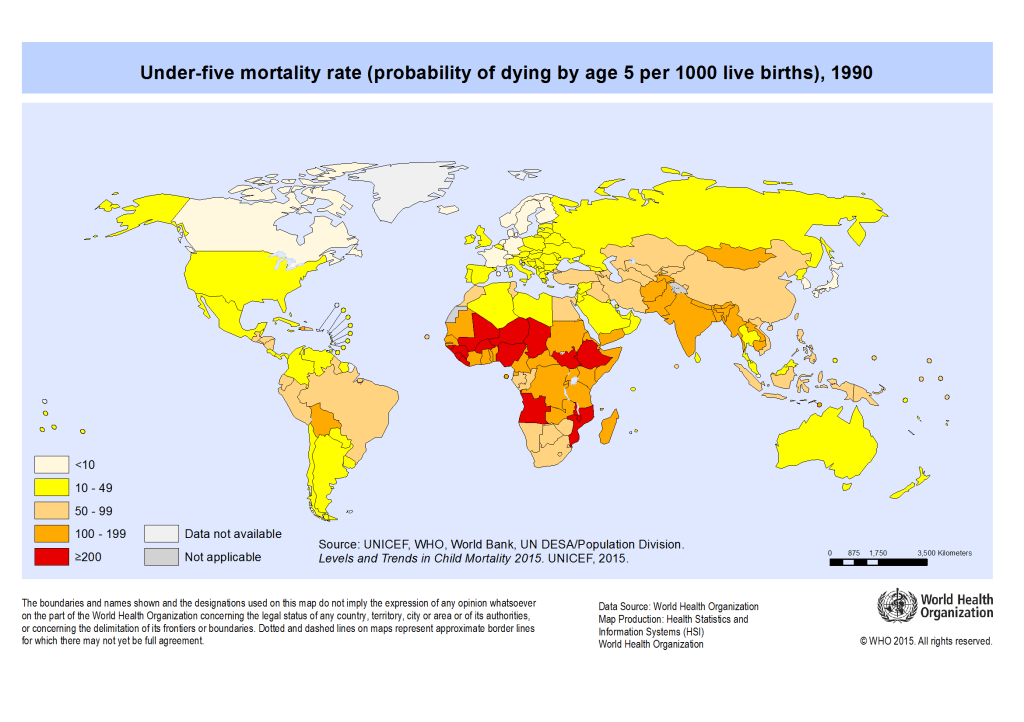
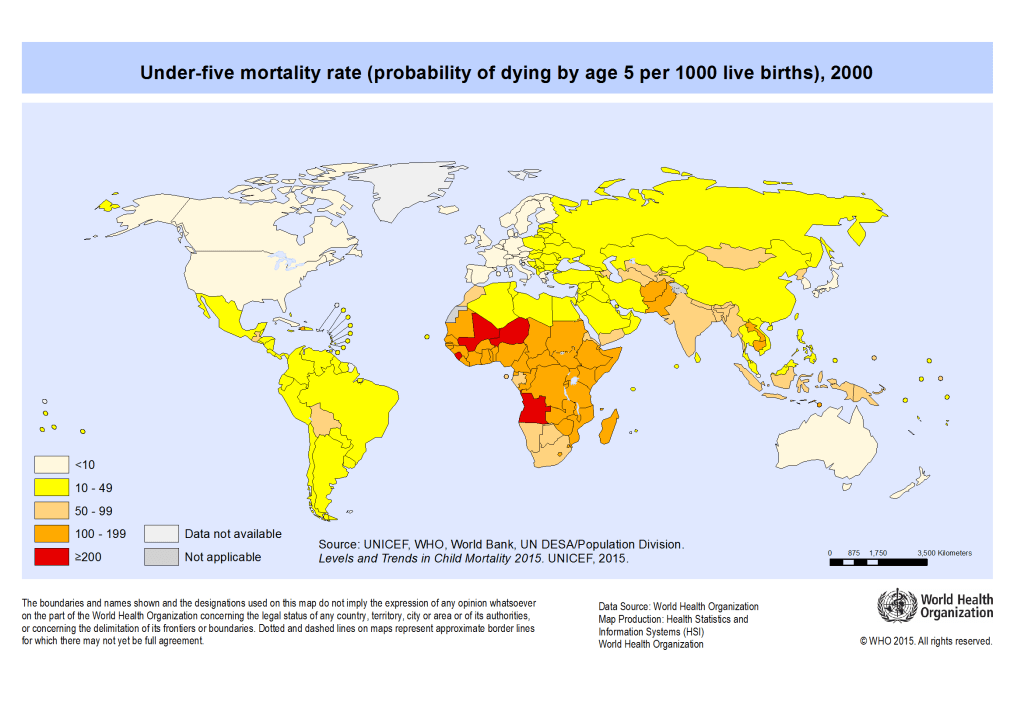
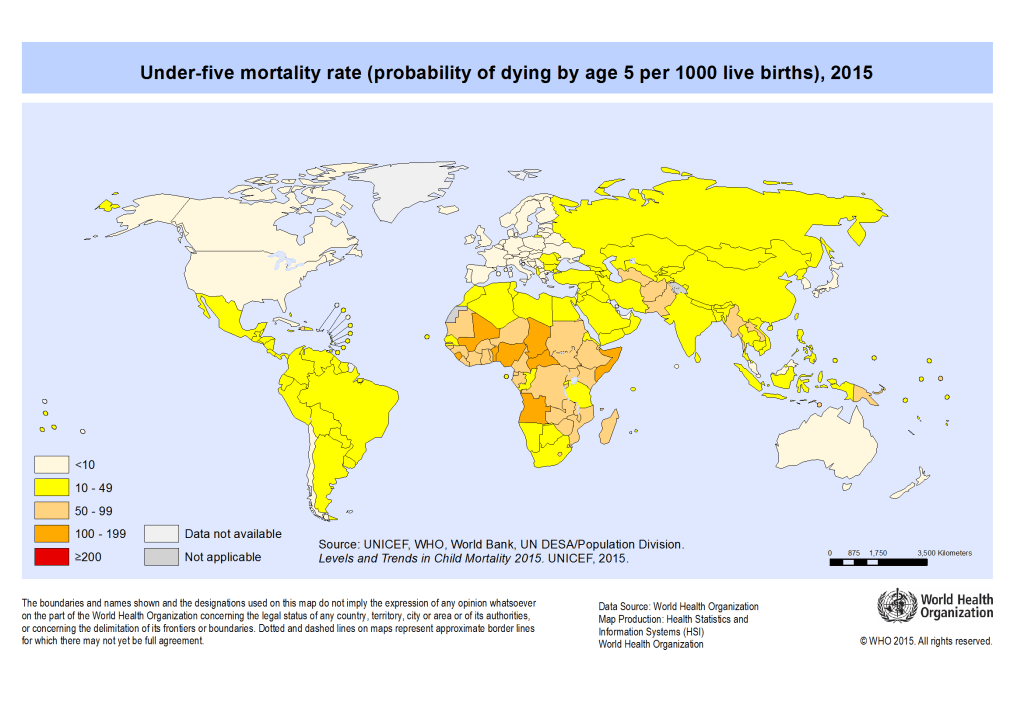
Since 1990, global under-five mortality has decreased 59%, with at least 40% reductions in every region. This is a massive decline that represents millions of lives saved since the 1990 benchmark at the beginning of MDG data tracking initiatives. However, improvements have been uneven, particularly when examining regional progress and poverty levels. The World Health Organization (WHO) published that “in 2018, the under-five mortality rate in low-income countries was 68 deaths per 1000 live births – almost 14 times the average rate in high-income countries (5 deaths per 1000 live births).”
Under-five mortality rate tracking from 1990 to 2015 (WHO).
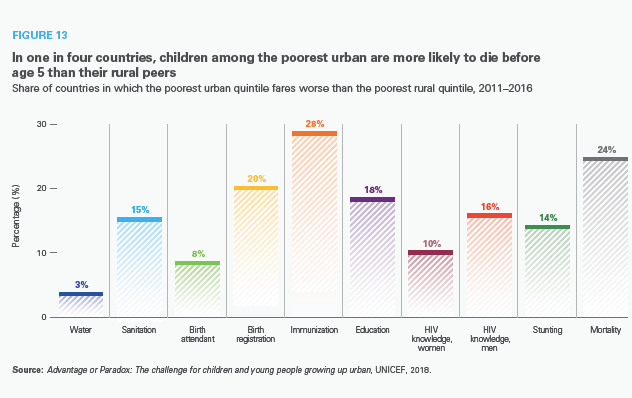
Despite progress, 15,000 children under 5 still die every day. The causes of these deaths are varied, but many are related to improper access to healthcare, vaccinations, and water and sanitation that could prevent disease. Young children continue to be impacted by forces much beyond their control. As the “Convention at a Crossroads” 2019 UNICEF report highlighted, “children younger than age 5 in countries experiencing protracted conflict are 20 times more likely to die from causes linked to unsafe water and sanitation than from direct violence.” Additionally, as population centers have shifted increasingly toward urban environments, and income inequality persists and widens in many major city centers, troubling patterns have emerged that disrupt assumptions that children in urban environments have inherently better access to healthcare and more positive outcomes.
The “Convention at a Crossroads” Report, prepared for the 30th anniversary of the UN Convention on the Rights of the Child, highlights the uneven progress made toward reducing under-five child mortality rates. Contrary to some assumptions, in one in four countries, the poorest fifth of young children in urban settings have a higher mortality rate than the poorest fifth of children in rural settings.
Additionally, several preventable diseases continue to affect young children disproportionately. Malaria continues to contribute significantly to the death of young children around the world, particularly in the sub-Saharan African region. Of 219 million malaria cases in 2017, 61% were children under five years old. When this data is broken down, it equates to the stark reality that every two minutes, a child under five dies of malaria. For families trying to maintain health for multiple children, malaria poses a real danger without proper access to care, and at a national scale, the impacts of the disease are a source of massive public expenditure.
Citizenship, Registered Births and Legal Status
As questions of citizenship, nationality, statelessness and migration have emerged as critical global discussions in recent decades, worth noting is the UNCRC’s seventh article, specifying that “the child shall be registered immediately after birth and shall have the right from birth to a name, the right to acquire a nationality and. as far as possible, the right to know and be cared for by his or her parents.” However, still one in four children under the age of five have never been formally registered. This has huge implications for access to medical care, legal protection, social services, education, and future property ownership through legal channels. UNICEF’s coverage of the current data highlights that “universal birth registration is also part of a system of vital statistics, which is essential for sound economic and social planning. Birth registration is therefore is not only a fundamental human right in and of itself, but also key to ensuring the fulfillment of all other rights.”
Early Childhood Education
As previously described, a holistic definition of early childhood development and care is essential to creating meaningful progress.
Bolstered by international attention and investment following the Millennium Development Goal 4, focused on increasing primary school enrollment, the Education for All (EFA) movement emerged and picked up speed throughout the early 2000s. In the era of the MDGs, primary school enrollment rates did indeed increase—while almost 20% of primary-school age children were out of school in 1990, now this number is less than 10% globally, according to the “For Every Child, Every Right” report by UNICEF for the 30th anniversary of the Convention on the Rights of the Child, as described in the last post.
However, many have criticized the goals, means, and impacts of the massive investment in this era of expanding enrollment. As Juan Carlos Barrón Pastor argues in Education and International Development (McCowan and Unterhalter, 2015), the push toward schooling can be seen as “part of the forces promoting non-development disguised as development … promoting consumption, competition, alienation and individualism” rather than “constructing knowledge for solidarity, respect and a more healthy conviviality for all living being alongside self-sufficient communities” (71). As the EFA movement pushed on toward its goals of enrollment, the international gaze turned toward increasing access to schooling, with noble intentions and a hopeful gaze toward the hypothetical outcomes of this increase in access. However, this emphasis promoted a limited version of transformation defined by a fixed goal: more students participating in formal education systems. In Hanushek and Kimko’s (2000) work to assess human capital impacts on economic development, schooling quality “boosts the explained variation in GDP per capita among thirty-one countries in their sample from 33% to 73%…[and] the effect of schooling ‘quantity’ is greatly reduced and largely insignificant” (McCowan and Unterhalter, 2015). Quality has, by many accounts, suffered under the consideration of increased schooling as the sole metric of success.
These errors should be noted and care must be taken to avoid similar pitfalls as the lens of international development efforts now shift toward eerily similar goals, but simply for younger children. If enrollment is again the target of success, the failures of the EFA movement that led to more students in chairs without meaningful learning will apply to younger students, missing a window of critically important quality environments, interactions, and access to services that can only transpire when quality is emphasized, not just quantity.
Tracking has already begun along the lines of enrollment as a metric of early childhood education, which, to be clear, has an important function. It is worthwhile to know who is in ECE, and where gaps in equitable access persist. Global participation in early care and education was 70% in 2016, an increase over 63% in 2010, based on UNICEF tracking of both care and preprimary education. The World Bank estimates for preprimary education specifically indicate roughly 51% global participation (see chart above). Regional progress varies, as was the case in MDGs, with sub-Saharan Africa at 41% and Northern Africa and Western Asia at 52% according to UNICEF data. While over 70% of OECD countries have “integrated early childhood education and care (ECEC services,” there is considerable variation in this group of countries as well among access to care for the youngest children: in Mexico and Turkey, less than 5% of children participate in ECEC under the age of 3, while in Denmark, Iceland, Israel, Luxembourg, Korea, the Netherlands, New Zealand and Norway this number is over 50%. Alongside this data, however, quality indicators must be valued and examined closely to make meaningful advances.
Conclusions
While the convention broadly addressed the rights of all children under the age of 18, the most vulnerable and voiceless of these children—those under the age of five—have been included to some extent in the progress of the past 30 years. Substantial attention and investment has been made in the earliest years of life, but there are still noticeable areas of failure and disparities between regions in progress, investment, and awareness about the critical importance of early childhood and its lifelong impacts. As investment in research and interventions regarding the earliest years of life have increased in number and deepened in rigor and impact, there is reason to be hopeful that early childhood outcomes are on a track to improving in the years to come. However, this can only come as we examine data carefully, and make critical decisions about how to track progress toward goals in meaningful ways that prize the health, safety, and thriving of each child through high-quality care and education and meaningful outcomes, not just easy-to-track inputs.
What’s in a Goal?: International Goal-Setting and Discourse on Childhood, Thirty Years After UNCRC
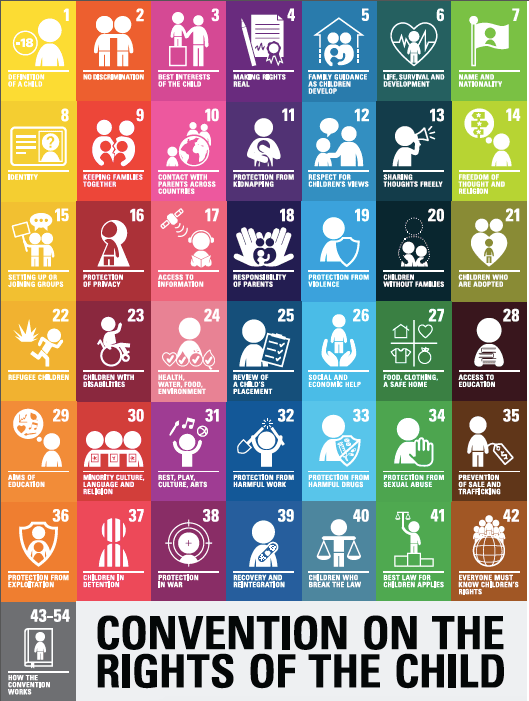
In 1990, the United Nations adopted the Convention on the Rights of the Child (UNCRC). It became the most widely-adopted human rights treaty in history and addressed protections for the physical health and safety, educational needs, legal rights and freedoms of children globally—though, notably, the United States alone has not yet signed it.
It includes such protections as the right to life , to be registered with official government processes at birth, to have a nationality, to express opinions, to access information and media, to choose their own religious affiliations, and to rest and play. It emphasizes protections against kidnapping, separation from families (unless harm is being done to the child), exploitation via human trafficking or use as a child soldier, sexual and physical abuse, and unsafe labor.
Additional emphasis, both in awareness and investment, came with the announcement of the Millennium Development Goals (MDGs) set forth in the United Nations Millennium Declaration of 2000. These goals added additional focus to specific areas such as universal primary education (MDG 2), reducing child mortality (MDG 4), and improving maternal health (MDG 5), along with other important health outcomes in diseases that affect many young children like malaria and HIV/AIDS (MDG 6). This global-scale “big push” (as Jeffery Sachs described the function of global investment for development, with drew its own set of criticisms) prioritized specific indicators of success, and targeted regions falling behind in these goals with additional attention toward meeting goals. Despite many justified criticisms of these efforts, which will be explored in Part 2 of this post, the discourse that has followed the MDGs has brought a new lens of attention and unprecedented level of international collaboration and information exchange that has brought childhood into an increasingly cemented place in international decision making.
In the 30 years since the UNCRC’s adoption, massive shifts in technology, access to information, environmental resources, climate, educational systems, and healthcare advances have changed the lives of children and families profoundly. Childhood looks different in many ways for millions of children around the world, and yet the core needs of young children remain unchanged: safety, medical care, nurturing care and supervision, basic physical provision and shelter, cognitive stimulation and opportunities to play and discover. How these needs are defined, quantified, and tracked, however, matters for how the international community ultimately determines what it means to get closer to protecting the rights of all young children.
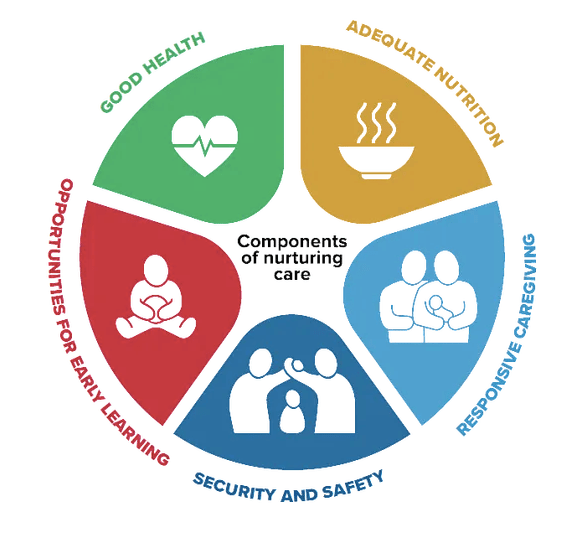
One effort to promote a holistic definition of child development is the Nurturing Care Framework, developed by UNICEF, WHO, and partner organizations to highlights these basic needs, which promotes a five-dimension construction of child development including good health, adequate nutrition, opportunities for early learning, security and safety, and responsive caregiving.
This framework is intended to specifically address the first three years of life as a critical period prior to most formal education settings where healthcare supports might serve the most effective means of intervening at a critical time of child development. These dimensions are not intended to be a simple intervention or the start of any singular policy, but rather are intended to be a starting point for national and international questioning of current approaches. In some ways, frameworks such as this one have emerged as a means of adding breadth to MDG goal-targeting efforts that were often critiqued as narrow in scope and limited in impact when detached from their idealistic aims.
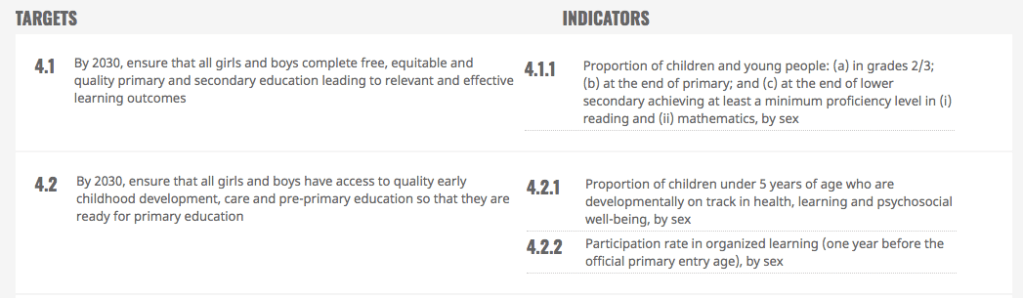
SDG 4.2 focuses on early childhood development, care, and pre-primary education, with indicators tracking under-5 developmental progress, and participation in organized learning prior to primary school entry.
The Sustainable Development Goals (SDGs), announced only a few years ago, include two specific metrics tracking early childhood development, care, and education as a subset of SDG 4, the educationally targeted goal of the SDGs. While the SDGs have increased the visibility of early childhood through specific attention, if methods of tracking progress rely on thin definitions and surface-level indicators of what it means to be “developmentally on track in health, learning, and psychosocial well-being,” the SDGs will fail to adequately and meaningfully drive progress toward genuine quality of life improvements for the world’s youngest children. As scientific knowledge and public awareness continue to expand regarding the importance of the first five years of life and how to support child development, a robust framing of child development (such as that of the Nurturing Care Framework) that retains supportive adult relationships as a core component and does not look at any one metric in isolation will be a core component of achieving meaningful progress globally. Additionally, it is imperative that a robust level of investment in data collection efforts and progress monitoring accompanies this effort so that the complex care-related components of early childhood metrics are not cast aside in favor of easy-to-measure, but ultimately ineffective methods of assessing global progress toward ensuring the rights of all children to thrive.
So, considering the full picture of child well-being globally, how are children faring across these domains 30 years after the sweeping declaration of rights and protections made by the U.N., the era of the MDGs and the recent SDG-related efforts?
See Part 2 for a look at the data, what it reveals about the impacts of global investment and attention over the past thirty years, and the role of early childhood education in addressing areas where progress is critically needed.
Additional Resources:
To learn more about the history of children’s rights, click here.
For more on the 30 years of progress and next steps since the UNCRC, explore the UNICEF website and “Letter to the World’s Children” by Henrietta Fore, UNICEF’s executive director.
To read a children’s version of the UNCRC and share with a child in your life, click here.
 The World of the Early Years: Global Early Childhood Education